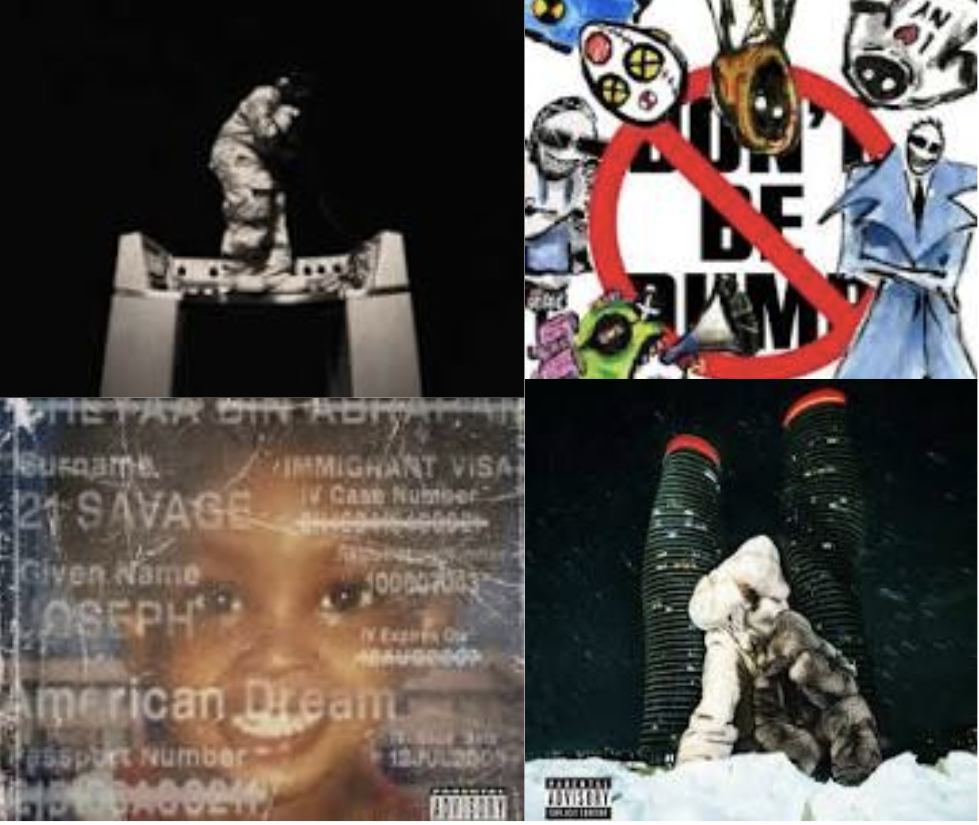
When A$AP Rocky released his fourth album “Don’t Be Dumb” on Jan. 16, I waited for a drive with my friend to give it a real listen. It was a night with not much to do, perfect for a deep analysis.
Driving down Shaker Boulevard, we didn’t make it past Richmond Road before we gave up on it, not more than four songs in. A$AP Rocky’s lyrics sounded forced, the same as many rap songs do today. His choruses unfolded just like everyone else’s. The popular song “STAY HERE 4 LIFE” follows a predictable structure of chorus-verse-chorus, with the beat relying on trendy trap elements that lack innovation.
The reality is, most new music is not nearly as exciting as old music from the ’70s through the ’90s. Albums released in the past 10 years feature worse music and production than those of earlier decades, but they enjoy more hype through social media. Music today is about media success instead of quality. A 2024 study of 12,000 songs across five decades found that lyrics have grown significantly simpler and more repetitive.
We need a new wave of music, ideas and creative artistry.
Rap has undergone the most dramatic statistical transformation of any genre over the last 40 years. Though still the world’s most popular genre, data suggests its quality has declined, with more repetitive rhymes and chorus-heavy songs. In “Redrum,” the most streamed song on 21 Savage’s 2024 album “The American Dream,” he repeats the word “redrum” 11 times per chorus, with three choruses.
New music relies on rhythm and vibe to gain popularity, sacrificing lyricism in the process. Rap has moved from critiquing society to individualistic themes. First-person pronouns such as “me” and “I” dominate. Artists have shifted from telling stories to promoting their own brands.
I haven’t finished Don Toliver’s 2026 album “Octane.” Centered on car culture, speed and late-night, cinematic atmosphere, the album lacks depth. How couldn’t it? The average song length is 2 minutes and 46 seconds. In contrast, the average song length on The Notorious B.I.G.’s 1997 album “Life After Death” is 4 minutes and 32 seconds. Reflecting his rise to fame and the pressures that came with it, Biggie’s album is about success, paranoia, street life and mortality.
One of the biggest names in rap, J. Cole, released an album this month titled “The Fall-Off.” That fall off is the fall off of rap. Cole criticizes the decline of lyrical proficiency and the inevitable cycle of fame.
Topics of new rap music are boring; the lyrics are easy to follow. In the collaborative album “$ome $exy $ongs 4 U” by Drake and PARTYNEXTDOOR, the headline song “NOKIA” uses a catchy, repetitive verse, “who’s calling my phone,” to emphasize modern attraction and toxic relationships. When a specific sound or genre becomes popular, called the “copycat” effect, the market is flooded with similar-sounding songs to ensure commercial success.
The rise of Digital Audio Workstations allows for the heavy use of Auto-Tune, synthesized sounds and pre-recorded beats, which reduces musicianship and vocal training. Playboi Carti’s album “MUSIC” follows the trend of “vamp” and high-pitched vocal experimentation, often pushing Auto-Tune to extreme, jarring levels.
But the problem isn’t the music alone — it’s our crumbling attention span.
I constantly find myself bored while trying to give new albums a chance. I make split-second decisions about songs and often forget to go back to them with an open mind. Then, I fall back on the familiar by listening to music I know I will enjoy.
And old music is actually winning. Streaming data shows that “catalog” music (songs older than 18 months) now accounts for the majority of consumption, as users retreat to the familiar. “Old” songs represent approximately 72 percent of the U.S. music market.
The share of the market for new music is actually shrinking, with the 200 most popular new tracks accounting for less than 5 percent of total streams—half of what it was just three years prior.
In the past, MTV or Top 40 radio forced everyone to hear the same big hits at once. Now, everyone has their own niche bubble, making it feel like there are no huge new stars emerging to replace legends like Michael Jackson or Prince.
And the nostalgia factor fosters a greater appreciation for old music. People tend to believe music was better during their youth. Music is linked to memories, and it’s hard for new songs to compete with music people have loved for years or decades. Streaming platforms like Spotify and Apple Music don’t help. They auto-play popular and, thus, “safer” music, which keeps listeners from hearing new, unusual music and trains them to fall back into the familiar.
Artists know that corporations promote content that fits within the existing, successful trends and are adjusting their music accordingly to maximize exposure and revenue. So, songs are about a 15-second, catchy snippet for TikTok. They have become much shorter and repeat choruses more frequently.
Major labels — dominated by the big three: Universal, Sony, and Warner — are less willing to take risks on rising talent. They wait for an artist to prove themselves on social media or with numbers before giving them a contract. Country artist Zach Bryan had more than 4 million monthly listeners and more than 1 billion streams before signing a contract with Warner Records in 2021.
The production of new music needs to change in order for the industry to succeed, and the media must break the cycle of conditioning people to prioritize the familiar over the challenging. It is not that we need one person to save music — just that we must be more accepting of new ideas.
Maybe next time I’ll let the album play past track four — because sometimes the fall-off isn’t the music, it’s patience.