
The Cleveland Guardians’ April 3 home opener was a 4-1 win over the Chicago Cubs, played before a sellout crowd. This new season, like every new season, brings endless possibilities for what a team can achieve.
Except, for the Guardians, and many other small-market teams, anything is really not possible.
Despite having the second-highest revenue of all professional sports leagues in America, Major League Baseball does not have a salary cap.
The biggest resistance has always come from the MLB Players Association, which has always fought a cap because they believe the current system represents players’ true market value, and they don’t want to put a cap on potential money they could be making.
Instead of the cap, the market-driven system allows teams to spend as much as they want, with the only penalty being a luxury tax teams pay after they exceed a certain payroll threshold. The threshold last season was $241 million.
The first year a team exceeds it, they face a 20 percent tax, and each year after the tax increases by 10 percent until their salary total falls below the threshold. Teams who exceed the threshold by more than $60 million face tax penalties of up to 60 percent. Also, teams over the threshold by $40 million have their highest draft pick moved back 10 spots. Last season, only eight of 30 teams exceeded the luxury tax threshold.
The funds collected from the tax are divided between player benefits and funding teams that did not exceed the threshold.
Revenue disparity is a key issue with this system. Cities such as Los Angeles, Chicago, New York City and Boston make more money because they have more of everything – more fans, bigger media deals, fancy stadiums, sponsorships, and high attendance rates. The Los Angeles Dodgers, MLB’s highest-grossing team in 2025, brought in $752 million in revenue. The Athletics, MLB’s lowest-grossing team, only brought in $257 million. The Miami Marlins had the lowest payroll in the MLB last season, spending only $74 million on player contracts, while the Dodgers spent more than $396 million.
The MLB’s extreme wealth disparity, coupled with the absence of a salary cap and reliance on a luxury tax, have created massive payroll gaps between large and small-market teams. Last season, the average payroll before added luxury tax among the five richest teams was $331 million, while the average for the bottom five was $97 million.
The result is a league of two extremes: the big spenders who dominate the standings and the small-market clubs forced to obsess over every penny and build teams almost exclusively through the draft.
Without a cap, top players sign record-breaking contracts, like the New York Mets’ Juan Soto’s 2024, 15-year, $765 million deal. Proponents argue that a cap would make the league more competitive, while opponents argue that it would limit players’ freedom and that small-market teams can still be successful through smart management.
Let’s test that argument. Imagine that your class is assigned a group project. Four of the groups are allotted a $20 budget, and one of the groups is given $100. The $100 group can buy fancy, high-quality supplies, while the $20 groups must use inferior products and may not be able to afford enough of them. Each group is the same size, yet one has five times more money than the others. Do you think that’s fair? The MLB does. According to them, the $20 groups can be just as successful as their wealthier peers if they spend their money wisely.
Over the last five MLB seasons, five of the final eight teams in the playoffs ranked in the top 10 for payroll. Nine of the last 10 World Series winners have ranked among the top third of MLB payrolls. The dramatic inequity in what teams can pay players makes the Guardians’ success unique. While their triumphs are inspiring, they also prove the MLB correct: A $20 group can be successful in the unfair environment the league maintains.
Cleveland spent $94 million on payroll last year. A small-market team, the Guardians can’t afford to go shopping for the highest-priced free agents in order to build a championship team. Instead they have to work harder to succeed and must rely heavily on player development. Cleveland’s scouts have to be better at discovering talent than others. Their minor league coaches must teach Guardians baseball (bunts, contact hitting, stolen bases, elite pitching and impeccable defense). Their front office has to focus on long-term planning to create a sustainable winning team.
ESPN rates the Guardians’ minor league system second best in baseball, with seven top 100 prospects. And, in the era of, “Win, now” – when managers are on the hot seat – the Guardians have only had two managers in the last 13 years.
At the end of the 2025 season, Cleveland only had nine players rostered with a salary more than $1 million, and six of their nine playoff starters were making less than that.
Most recently, seven-time all star and future hall of famer Jose Ramirez and the Guardians announced a 10-year, $175 million contract. The longest-tenured active Guardians player, he has only ever played for Cleveland since his 2013 rookie season. His new contract reaffirms his commitment to the organization and demonstrates the franchise’s commitment to resigning players through creative financing. To fit within the Guardians’ budget, the contract, which runs through 2032, will stretch payments through 2051.
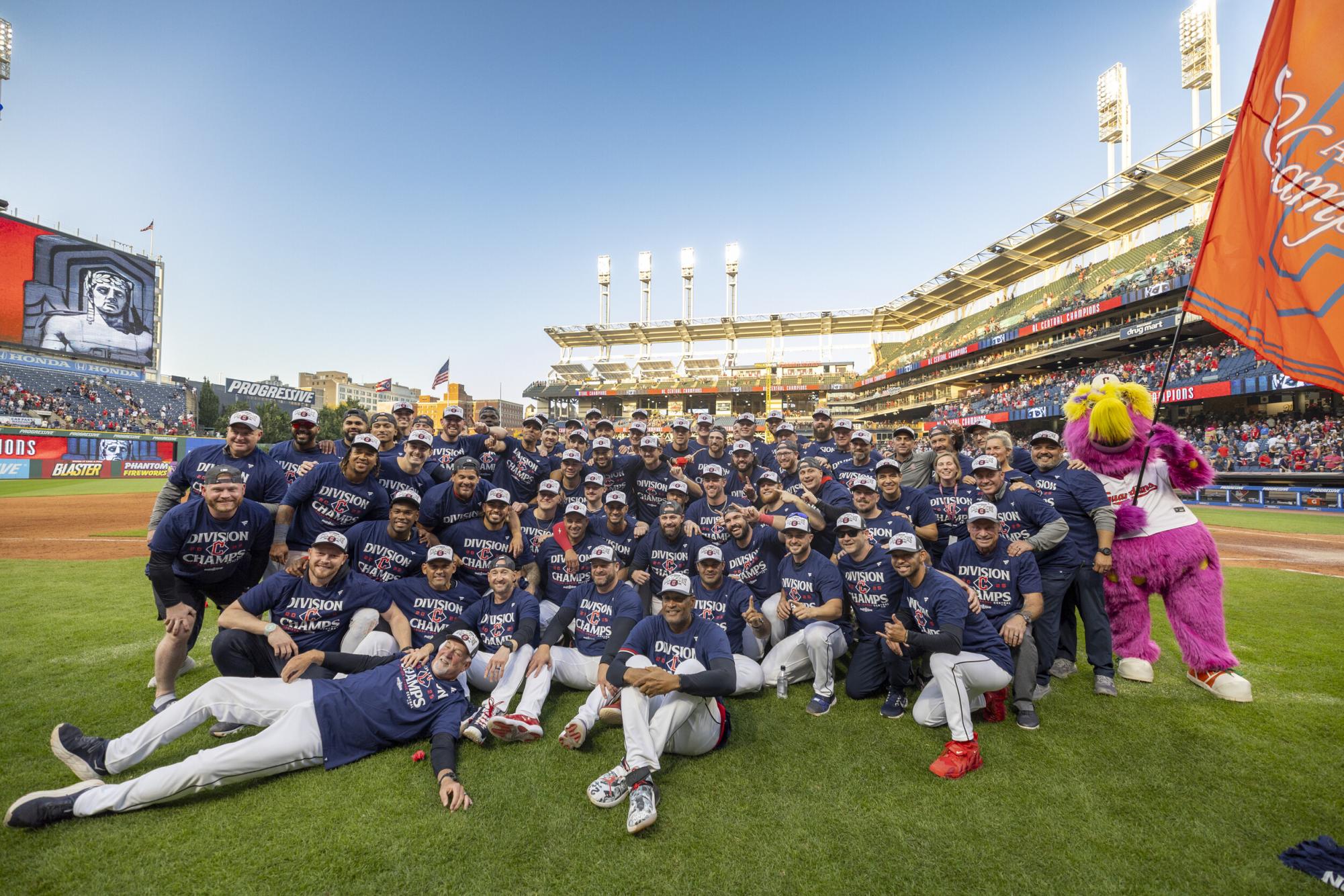
The focus on coaching and developing young, inexpensive players has paid off. Cleveland has had a winning record in eight of the last 10 seasons, won the AL Central division six times and made the playoffs seven times.
The Milwaukee Brewers are the only other team to live in the bottom third of payroll and compile a winning record in eight of their last 10 seasons.

So while the Guardians’ odds to ever win a World Series are depressingly low, and the absence of a salary cap means they start every season at an unfair disadvantage, as fans, we shouldn’t pout and complain. Instead, we should cheer for and celebrate an organization that consistently wins even though it starts every season with fewer resources than its wealthier opponents.
Today, the Guardians sit atop the American League Central division with a record of 24-21, and third overall in the American League.
It’s a cliche to say that “It’s about the journey, not the destination.” But that expression applies to being a sports fan, especially in Cleveland– and in every small market. Each year only one team can win a title. But does that mean every other team was unsuccessful? Not at all.
Remember when Tyler Naquin hit a game-winning, inside-the-park home run. When Rajai Davis hit a game-tying home run in game seven of the World Series. When Oscar “SpongeBob” Gonzalez hit a walk-off home run in the 15th inning in the 2022 wild card series.
Being a Guardians fan, or a fan of any smaller market team, is defined by resilience, loyalty and embracing the struggle. In our lives, we might benefit from appreciating the smaller victories. Getting a better grade than you expected on a biology test you studied hard for. Receiving a compliment for the new, light blue Jordans you were nervous to wear. Or getting home to the smell of your favorite home-cooked mac and cheese.
And, when Cleveland wins the World Series one day, despite how rigged the journey is against them, it’ll feel way better than it feels for Dodgers fans when Los Angeles buys its way to another inevitable title.