
One life choice can define you, so choose well.
Students heard this message March 30 in the large auditorium when they attended an assembly featuring a conversation between Desmond Howard, a Heisman Trophy winner and Super Bowl XXXI MVP, and his childhood friend Keith LaMar, who is currently incarcerated on death row at the Ohio State Penitentiary.
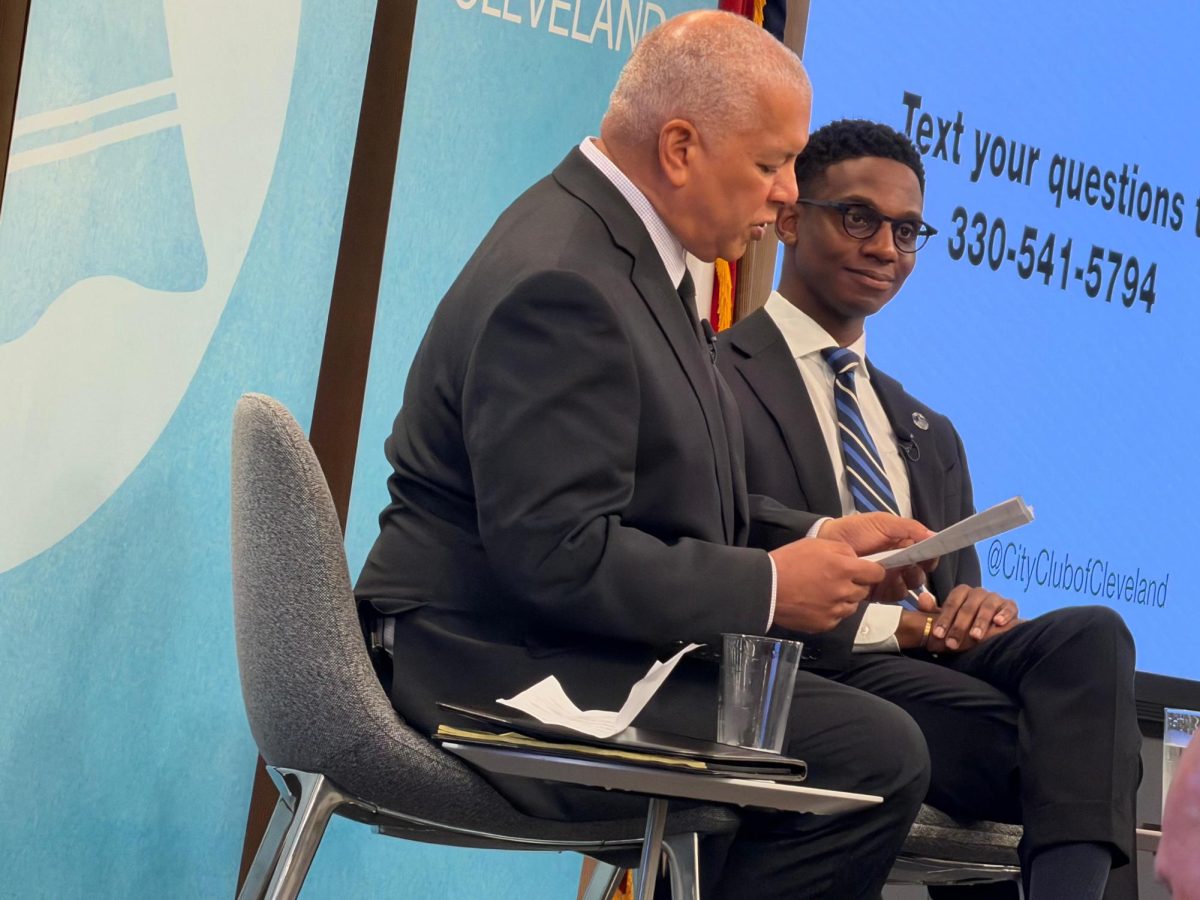
The conversation was moderated by one of LaMar’s lawyers, Ayesha Bell Hardaway (’93).
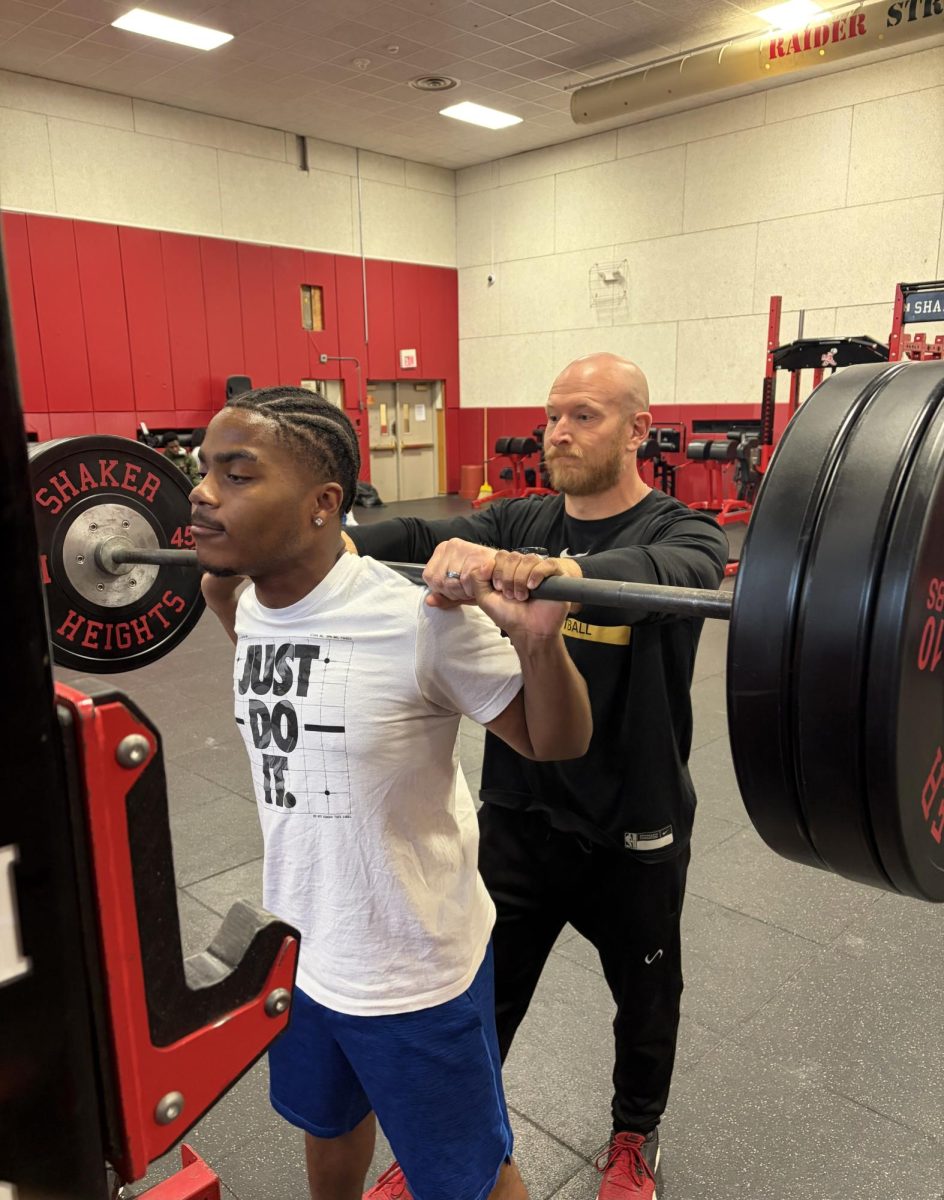
Head basketball coach and guidance counselor Danny Young, who collaborated with Hardaway to bring the event to the high school, said he prioritized the attendance of students he thought would benefit most from hearing this assembly’s message.
“I just thought about the population. Sometimes we have some at-risk kids here that I believe need to hear the message. And even kids that’s not at risk could benefit from that story,” Young said.
Young also promoted the event to specific student-athletes.
“I thought it’d be very profitable for some of the sports that house our minority males to be invited. If you notice the larger sports, your football, your basketball, your track and field, your wrestling scholars were there,” Young said.
Hardaway guided the discussion by posing questions to both Howard and LaMar, who called in from prison. Because calls from prison are limited to 10 minutes, LaMar had to call back throughout the assembly. The two men talked about their upbringings, both playing on the same pee-wee football team, and how they ended up on vastly different life paths.
Howard emphasized the role of early influences. “I carried the foundation that was built,” he said. “The foundation that we both got at an early age in pee-wee football was very important for us. I mean, I don’t think we realized at the time, but then later in life we still draw back to that.”
LaMar’s life took a different path. In 1983, at age 13, he was arrested for joyriding. A first degree misdemeanor in Ohio, joyriding is the action of driving a stolen vehicle for enjoyment.
“That moment was a turning point for me,” LaMar said.
“That 30 seconds of that joyride, just 30 seconds, changed his whole trajectory of his life,” Young said.
After his release, LaMar was arrested again at age 19 and convicted of murder. While he was serving his sentence, a prison riot broke out in which nine inmates and a guard were killed. He was charged and convicted in their deaths.
According to LaMar and his legal team, his conviction in the aftermath of the riot raises concerns about the fairness of the trial. They argue that the case relied heavily on incentivized testimony from jailhouse informants and that he was wrongfully implicated amid pressure to quickly resolve the incident. A jury ultimately found LaMar guilty of multiple counts of aggravated murder, and he was sentenced to death.
During the assembly, LaMar spoke about the broader implications of his experience. “I would’ve gotten off easier had I actually killed someone,” he said, expressing frustration with what he believes are systemic inequities.
Despite his incarceration, LaMar has built a body of work aimed at advocacy and self-expression. He is the author of “Condemned,” has released a musical album titled “Freedom First” and has created various works of art. He also runs a literacy initiative from prison.
Howard highlighted his friend’s resilience. “He does music. He’s an author. He has a literacy program,” he said. “And to be in his condition and to be able to still produce that, like, who does that? It’s incredible.”
LaMar currently has a team of six attorneys working to appeal his case ahead of his scheduled execution in January 2027.
Howard said the experience has pushed him to reflect on how he uses his own platform.
“He inspires me. He definitely inspires me,” Howard said. “It’s like, I mean, I’m doing [ESPN] GameDay, but damn, I could be doing more. I should be doing more.”
For Young, bringing Howard to speak added an important dimension for students.
“There’s some kids I can’t reach,” he said. “That’s why I have variety in my staff. Like, if you don’t feel like talking to me, you got your choice in the rainbow. You have a choice in ideology, you have a choice in the thought process of who you want to lean into.”
Howard echoed the importance of exposing students to new perspectives.
“To be able to talk to the youth and hopefully plant a seed that maybe starts to get fertilized by other things and starts to sprout—that’s how I know I’ve done my job,” he said.
Young said the assembly succeeded in doing just that.
Said Young, “It reached, I thought, some different populations and thought processes for kids, which I thought was powerful for Shaker.”