
What has a face and hands, but no body? Ha-ha, you guessed it! The thing you don’t use anymore.
An analog clock has two to three spokes, or “hands.” The short, often thicker hand is used to indicate the hours, one through 12, and is sometimes called “the little hand.” The optional third hand is usually red and counts seconds. There are 60 dashes on a clock for 60 seconds and minutes, so the second hand moves around the clock face, over those 60 dashes, in one minute. Now, the minute hand, sometimes called “the big hand,” is often the most troublesome. There are 12 numbers on a clock, but 60 minutes, so the minute hand stops at each dash – for 60 seconds.
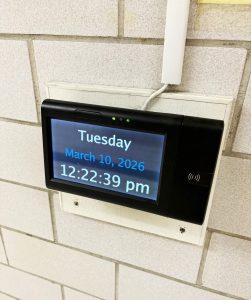
I can hear it now: “How can you tell the minutes from 60 miniscule marks?” Don’t fret, dear reader — you won’t be counting every little line just to see how long until lunch. Simply multiply the preceding hour (1-12) by five, and add a minute for each dash that appears after it but before the next hour number.
The process should take you approximately three seconds (four for a small watch face).
If you’ve managed to decipher this explanation, congratulations! You officially know how to read an analog clock. Easy, right? Now, let’s do some practice. Where would the hands be for 3:13 p.m.? The short hand is on the big number three, for the hour. The minute hand should be three dashes past the big number two. Regardless of their clock-reading abilities, most Shaker students have memorized the dismissal time on a watch face — even if they don’t know what that time actually is.
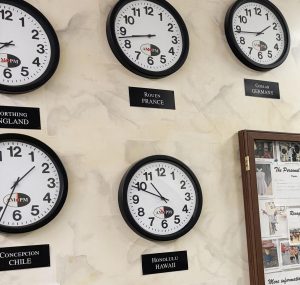
Speaking of watches, the increasing sales of smart watches are replacing students’ traditional watches and their use of classroom clocks. This may be a blessing in disguise, as some clocks in the high school aren’t accurate. The IB international clocks on display by the front entrance show times differing from their time zones, and one another, by several minutes and hours — and have done so for years. Is it “Education for a better world” if we can’t even get time around the world right?
Neglected clocks are perhaps a sign of the analog clock’s insignificance. According to a YouGov survey, only 43 percent of adults under 30 are able to instantly read an analog clock, placing them at the lowest adult percentage. Analog literacy increases with every older age bracket, which prompts the question: How many high school students can read a clock? Does the answer explain tardiness?
As use of the analog clock declines, fewer people think about adjusting their clocks twice a year, when daylight saving time ends and resumes. Longer afternoon daylight makes some people happy, but for Tom Murray, head custodian, the change is a rather dreaded one. Adjusting clocks that few people use is a long day of work. “It takes a whole shift — five to eight hours,” Murray said.
This biannual nuisance entails dragging a ladder to and from each classroom, trekking up its rungs, removing the clock from the wall, and — after the strenuous workout— carefully twisting a tiny knob to adjust the hour and replacing the battery if the clock is running slow.
Repeat the process in its reverse, and on to the next 196 or so clocks!
So the next time you snooze your singular analog alarm clock in the morning, or attempt to read the time during state tests, take a second to contemplate how the face of time is changing, indefinitely.