What happened to “sir” and “ma’am”?
My family has always used formal expressions in almost every social situation — it was what was proper in Annapolis, Maryland. The environment called for formal answers when speaking to adults or persons in charge, especially with the U. S. Naval Academy located close by. You forgot to unload the dish washer? “Sorry, sir!” You were issued a command or asked a question? “Yes, ma’am!” You enjoyed a conversation with adults at the dinner table, at a regatta or on the boat? “Of course, sir.”
When we moved to Richmond, Virginia, expectations of formal language intensified. There are plenty of stereotypes about southern living and its weird idioms — and by the way, “Bless your heart” is not a compliment — but formal language was truly everywhere. At school? You betcha. At the grocery store? You’d better pray to whomever you believed in that you said, “Thank you” to the cashier, or else brave the lecture waiting for you in the car.
But these days, formal speech is rare, even in formal political situations. In fact, even the name of our town, Shaker Heights, faces a formality problem. Residents have been more commonly calling Shaker Heights High School and the surrounding district “Shaker.” The name, while familiar to the community and surrounding areas, is not the city’s formal name, but its slang name.
If you are referring to the city itself, the name is Shaker Heights; if you’re referring to the school, it’s Shaker Heights High School; and if you’re referring to the school district, it’s the Shaker Heights City School District. It has become so common to call the city, high school and school district “Shaker” that the formal name has almost disappeared. No one who’s not from Shaker would ever know the difference between the formal and slang name because we know from context what “Shaker” is referring to.
This occurrence made me wonder — do we no longer use formal words because society does not call for them any more? Nataliia Tremblay, an English Language Learner teacher for the district, encountered the same question when teaching a lesson on the word “insipid.” When researching the etymology of the word, Tremblay’s student questioned why we never used the word, which means “bland” or “weak” or “flavorless,” anymore.
“That question stopped me short. It made me think — or perhaps ponder, or even feel momentarily pensive: Do we no longer encounter things in our lives or in society that could reasonably be described as insipid?” Tremblay said. “Or is this decline the result of a conscious choice to stick to safer, simpler language — to use verbal fast food rather than a carefully prepared meal made with just the right ingredients, selected by hand?”
Is Tremblay right? Have we really resorted to using less formal language because it’s just easier? According to Tremblay, precision gives way to speed. However, if we took the time to choose our words, perhaps we could use more formal language when the situation calls for it compared to the slang that’s become so common.
English teacher Valerie Doersen said that less exposure to detailed texts creates this struggle with formal language. “The ones who read books and news have a huge advantage over non-readers,” Doersen said. “If you don’t read longer, more deliberately-written texts, you don’t have the stamina to create them.”
The internet also plays a role. Faster connectivity means faster communication. Doersen said that the evolution of landlines into cell phones, along with other technological advancements, has caused people to use more shortcuts when communicating. “When we only wrote letters, it took time — find paper, buy stamps, go to the post office. So people took their time writing. Now we have instant communication, and the pace of life moves faster, so we want to communicate faster and take shortcuts,” Doersen said.
Emails set another language trap for students to fall into with formal language. How do I sound professional, but friendly, when writing to someone who is not my peer? Do I start with “Hey,” “Hi” or “Hello”? How do I address my teacher? By the name I call them in class, or their title? English teachers will tell you to never start your email off with “Hey” if you want your recipient to read your email kindly.
Doersen said that to write a good professional email, take a step back and remember whom you are writing to and what your point is and — be polite. “When emailing someone you don’t know, in a business capacity, or anyone in authority, always include a proper greeting, closing and signature — and proofread,” Doersen said.
A formal vocabulary is not a natural thing. If you want to speak better, you have to learn how to speak better. Tremblay also said that reading and hearing language is crucial to its development. “Formal language and sophisticated, precise vocabulary do not develop organically for most learners — neither in our first language nor our tenth. Both the when and the how must be explicitly taught and can only be internalized through repeated, meaningful exposure,” Tremblay said.
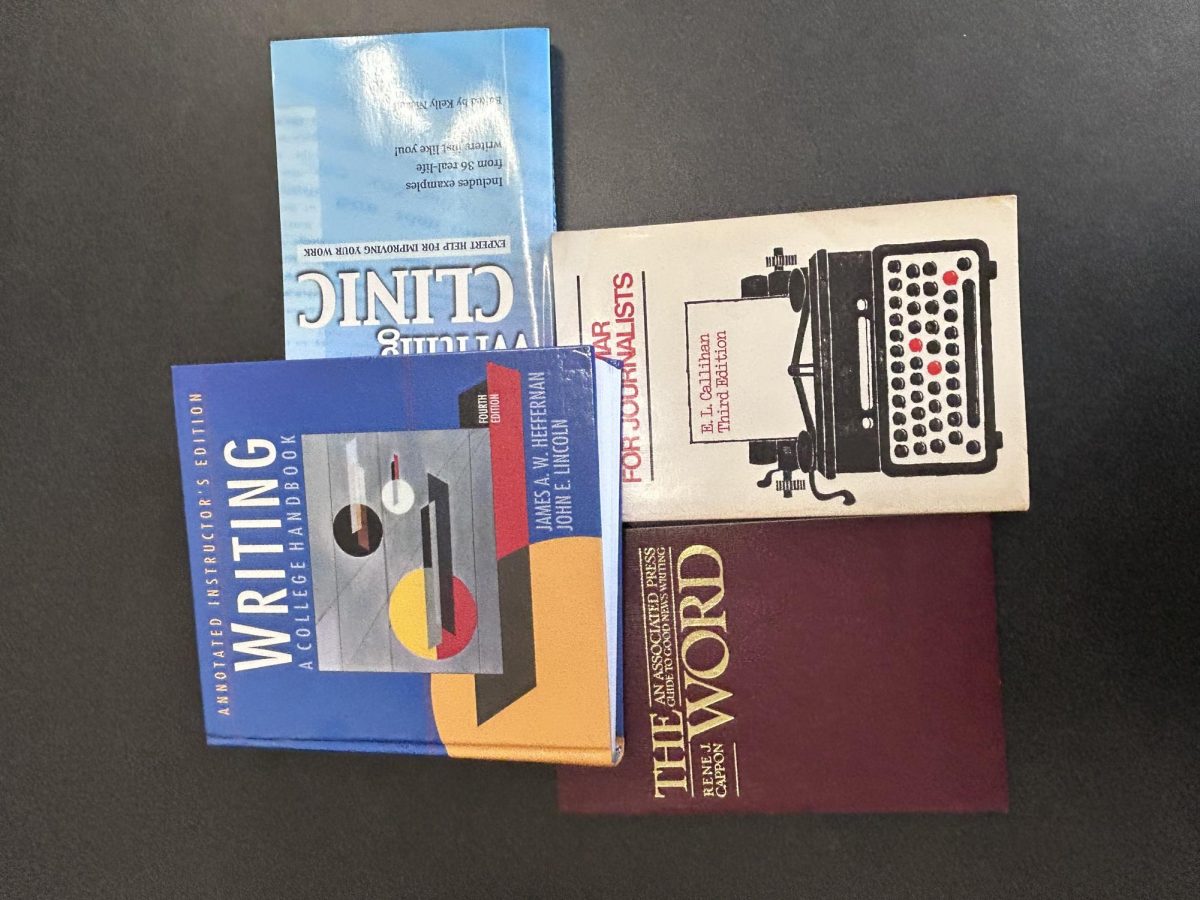
That exposure to formal language can be accessed in lots of places. Books help us, and so do newspapers — you’ve already taken the first step by reading this. There’s also linguistic influencers such as Thomas Finch whose Instagram account, @englishenjoyed, helps with language and grammar! Formal language, like it or not, is the language of adults, professors, admissions officers, and future bosses. By proving that you have knowledge of formal vocabulary, you can impress the bosses, teachers or colleges of your life.
As Tremblay pondered, “What if we challenged ourselves to choose differently — one delightfully elevated academic word at a time?”