
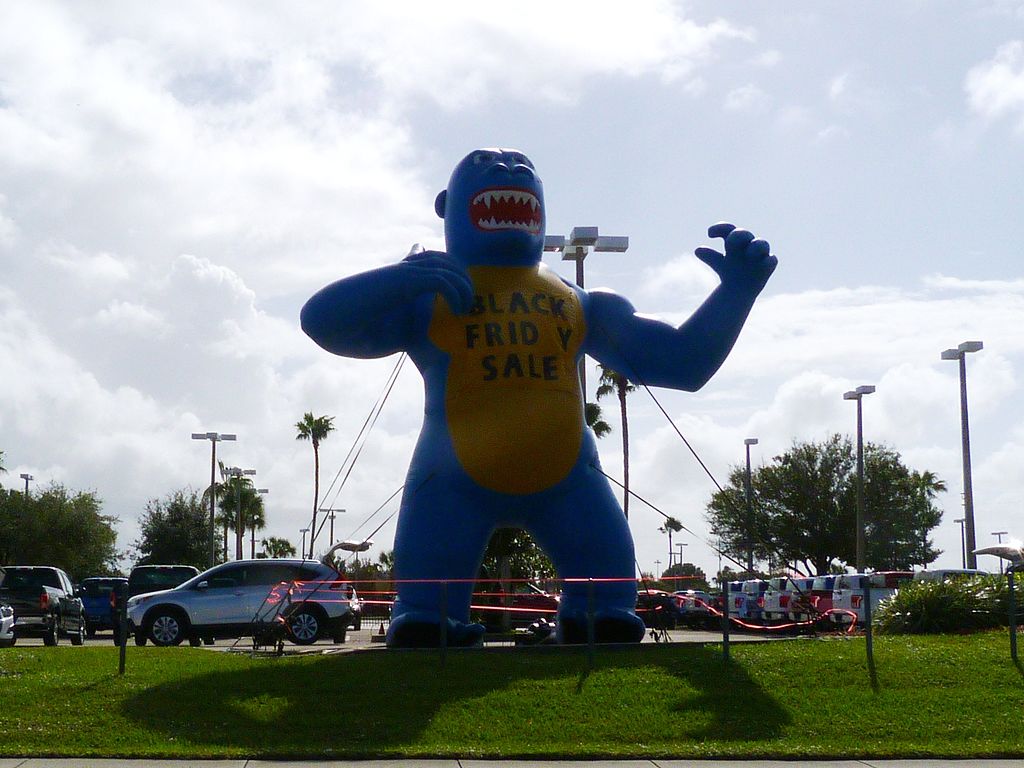
We Don’t Let Holidays Get in the Way of Shopping
by Lara Sesenoglu-Laird
Every November, a strange national ritual occurs: We Americans spend weeks preparing for a holiday about giving thanks for what we have by buying what we don’t have.
It doesn’t matter what we buy, just that we do it. We buy when we’re hungry, and then buy for when we’re hungry later. We buy when we’re happy, buy when we’re stressed, buy when we’re feeling any sort of emotion, really, all in the name of holiday spirit. We buy things while we’re buying things, and then go and buy more things while we’re at it.
Anyone unfamiliar with Thanksgiving might assume it’s the month where Americans come out of hibernation.
Grocery stores are besieged by hordes of people clamoring for pies and turkeys while bags of stuffing and cans of cranberry sauce fly off the shelves. Huge lines of people wait eagerly in Walmart and Whole Foods to pick up their premade meals, and then wait in a second line to pay for the inevitable last-minute additions.
Do people not cook for the other 11 months of the year?
Most Americans buy enough food to feed a small battalion, and then some. Leftovers are passed out to family and friends to take home, and then those leftovers are stuffed into the fridge to the point of bursting, to be eaten with lessening vigor as time passes and the turkey turns dry and tasteless.
ReFED, a food waste nonprofit, estimates that 320 million pounds of food will be thrown away this Thanksgiving. How does this gross display of overconsumption show gratitude?
What began as showing thanks for a rich harvest, a display of friendship and unity, has become a frenzied shopping occasion. Family members come together, yes, but half the time there’s little joy in doing so. Children bemoan the idea of leaving their friends and being around a bunch of people they don’t know. Teens lament the prospect of being bombarded with question after question about relationships and college. Adults complain about seeing “that one relative” and fighting a battle of politics across the dining table.
Now, don’t get me wrong, I’m not blasting family meetings as something that everyone hates. But for a holiday centered on family, it’s horribly ironic how it falls victim to weeks of stressing about whom to invite and what to buy. We spend more time thinking about Thanksgiving than we do on the day itself.
How fitting, then, that we reward ourselves the very next day in a mad dash to the stores. After spending weeks buying things, we turn around and go buy more things.
The day after everyone celebrates contentment with what they already have, they go to ravage stores for sales. Walmarts and Targets are practically mobbed for LEGOs and Pokémon Cards. Hordes of people wait outside Best Buys and Apple Stores for “cheap” TVs and MacBooks. Who cares about all the time and money you’re spending if you can buy a new wardrobe from H&M for 50 percent off?
Americans are such consumerists that Black Friday deals aren’t even contained to one day. No, we have Macy’s and Michael’s “holiday deals” that start as soon as October ends, Nordstrom and REI’s “early Black Friday deals” two weeks before Black Friday, Black Friday itself, and then Amazon’s Cyber Monday, which has basically become a second Black Friday. Adobe’s business department estimates that Americans will spend $253.4 billion this holiday season!
We keep buying, buying, buying, and have a wonderful pile of Aerie bags and Nike boxes to show for it. Stuff that we’ll probably use once or twice, if at all, before throwing into the closet to forget about for 20 years, when we’ll pull it out again and excitedly remark, “I completely forgot about this!”
Thanksgiving preaches gratitude, but Black Friday preaches low prices. We incessantly clamor for more, more, more, because we want it, because we need it, because they have it and we don’t. We say thanks at the dinner table, but are already planning for what to buy tomorrow.
Why focus on what we do have when there’s so much we don’t have? It’s not Thanksgiving anymore, it’s Thanksgetting.
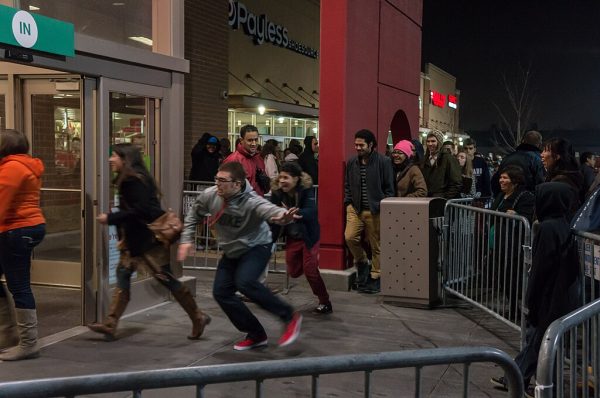
We Celebrate Thanksgiving, Then Forget it Overnight
by Caroline Niess
As families around the country plated their meals and sat down for dinner yesterday, workers in big retail corporations were stocking shelves to prepare for the massive crowds and hungry shoppers who awaited them within hours.
The irony in this: Thanksgiving is recognized as a holiday where Americans express gratitude for what we already have, but by the next day, we’re ready to voraciously pursue what we don’t.
Black Friday will kickstart the holiday shopping season for nearly 1.8 million Americans. The retail-related use of the expression dates back 50 years or so, when police used it to describe huge shopping crowds in Philadelphia the day after Thanksgiving. Now, people rush to stores as if the signs scream, “Free Louis Vuitton!” to get the best deals before their competitors snatch them. However, as consumer culture continues to grow, stores are starting their Black Friday sales earlier. For example, Amazon has a “Black Friday week sale.”
Workers are now clocking in and skipping quality time with their families to attend to stores and conquer the mass chaos before the clock even strikes 12 a.m. on Friday. Families are similarly choosing to leave the dinner table to chase discounts by partaking in online shopping instead of being in the moment. So what does this really say about us? When stores begin their sales on Thanksgiving Day, the entire purpose of the holiday is lost.
Thanksgiving, as we know it, is a time to reflect on what we already have, and show appreciation for those around us. It’s our reminder to appreciate relationships with others rather than material things. Thanksgiving is more casual now than it was when the Pilgrims and the Wampanoag shared their harvest feast in 1621. These values of gratitude persist to some extent, but Black Friday contradicts them.
Now, we turn to sales “unmatched” (as we say every year), quickly discarding everything we just posted on social media that we’re thankful for. Are we truly grateful for everything we have, or is it that post just for show?
Because consumer culture is very influential, there’s always a next best thing people must purchase to match their peers. When items go on sale, we rush to the store before others can claim them. We always want what we don’t have, but having wants is not the problem. The problem is being too quick to forget the gratitude we just expressed. Not only does consumer culture control spending tendencies, it also fosters greed, prevalent in our everyday lives. Thanksgiving now lives in the shadows of Black Friday because of this urge to obtain what everyone else has. If gratitude only lasts us 24 hours, then maybe we’re not really celebrating Thanksgiving, we’re just using it as a break before shopping season begins.
What makes this worse is that consumers are tricked by corporations into believing they are getting better deals than they actually are. Stores raise their prices before Black Friday so that when the sales are applied, customers think they are getting a bargain, when in reality, they barely saved anything.
People are wasting their money just because the Friday after Thanksgiving has a name. Shoppers justify their purchases with the belief that they got a great deal and that what they purchased would be more expensive at a different time. Because of advertisements and promotions, we’re convinced that our purchases are necessary, almost to the point of merging our wants and needs. We are losing the purpose of the holiday celebrated the day before: Thanksgiving.
Maybe we should rethink how we are spending the holiday — and how we’re devoting our time for the rest of the year. Thanksgiving is about being grateful for what we have; Black Friday tells us it’s not enough. It’s time to choose which message we believe in.








.jpg)