You know the story: The Pilgrims landed, struggled a bit, met up with some friendly “Indians,” then shared a feast to celebrate friendship. I remember making paper turkeys and pilgrim hats as a kid, convinced that Thanksgiving was just one happy feast.
Except it wasn’t.
The truth is much messier. The first Thanksgiving was in 1621, when the Pilgrims’ and the Wampanoag people agreed to help each other survive. The Wampanoag leader Ousamequin (whom colonists called Massasoit) offered support to the Pilgrims, not because he was friendly, but in order to protect his people from rival tribes such as the Narragansett. The first Thanksgiving was a purely strategic gathering.
The fragile alliance between the Pilgrims and the Wamapanoag eventually collapsed. King Phillip’s war occurred from 1675-1678. It was a conflict between colonists and various Native groups, primarily the Wampanoag, whose casualties are estimated at around 3,000. Thanksgiving was only a brief hiatus in the larger story of conflict and conquest.
The first Thanksgiving was only a shared meal, not some celebration of harmony. It was just a truce. And yet, every November, we retell the same purified version of the event. Meanwhile, Indigenous people and their allies have gathered yearly since 1970 in Plymouth, MA to observe the National Day of Mourning rather than giving thanks. For them, Thanksgiving is a reminder of the genocide of millions, stolen land and elimination of culture. How are these things a holiday?
Every year, the myth is retold. But recently, schools and museums have been updating their lessons. The Smithsonian National Museum of the American Indian recently released a study guide to help dispel this myth, emphasizing the realities of the first Thanksgiving. It explains how it was more about politics, alliances, and diplomacy than a friendly feast. Though with the current Trump administration, it will probably never see the light of day or make any impact.
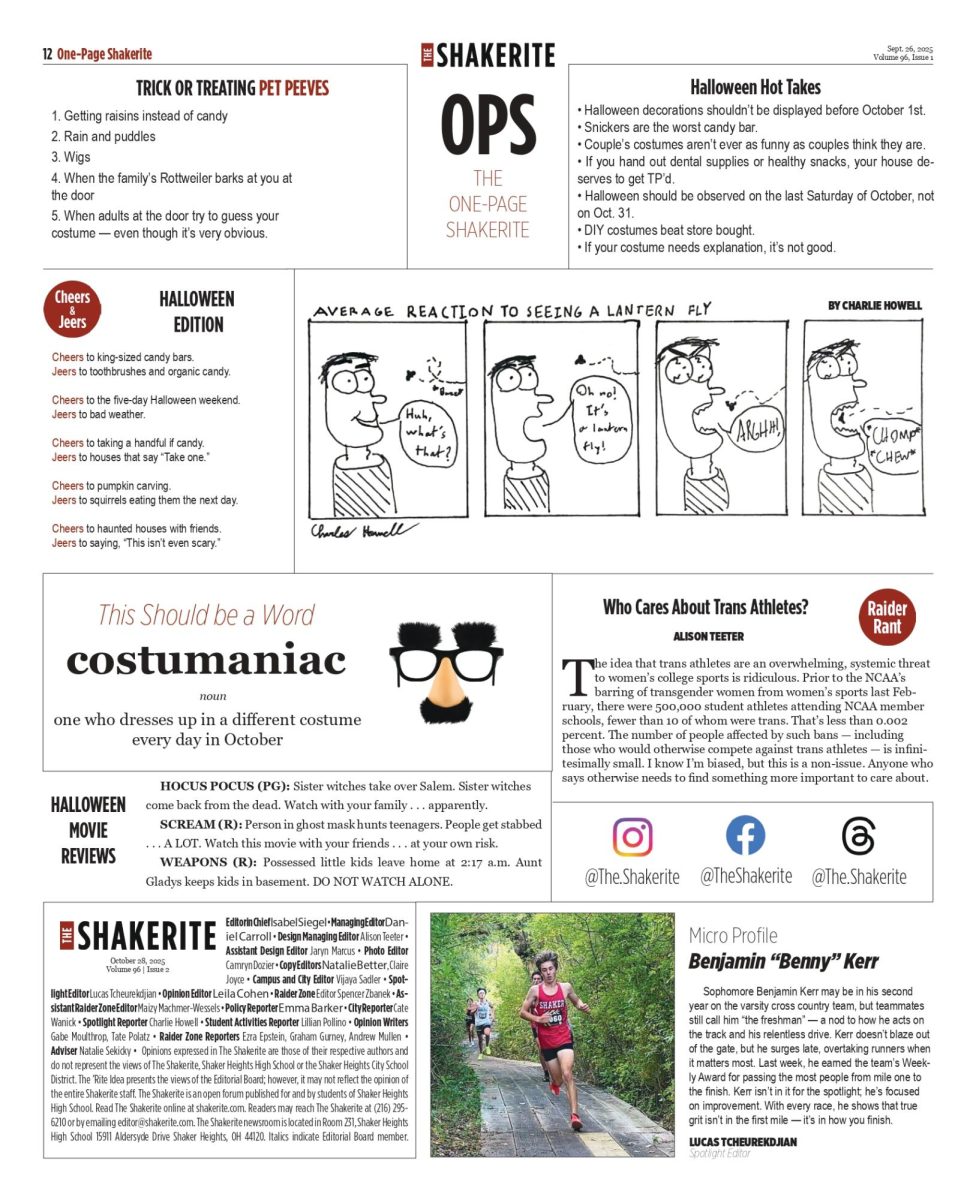
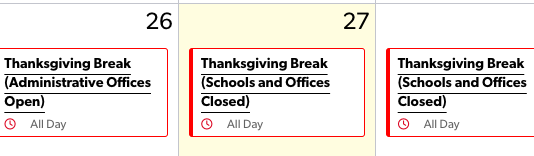
The district has recently moved away from celebrating holidays such as Halloween. As the Shakerite recently reported, Halloween celebrations were ended because not everyone can afford the costs of the holiday, and to be more culturally inclusive. If a costume parade around Woodbury isn’t inclusive, how is a holiday built on a myth that excludes and falsely represents Indigenous people acceptable? Our district even calls our time off in December and January “winter break” in order to be inclusive. If we’re willing to rethink that language, why not reconsider “Thanksgiving break”? Today is a far more complicated and contested event than Halloween or Christmas; it makes no sense that it escapes our inclusion efforts.
Let’s be real: Talking about history, or renaming this vacation, isn’t going to make our cranberry sauce taste any better, but we still need to face the truth. It’s important to get history right, even if it’s uncomfortable. And for little kids, that doesn’t mean telling them all the violent details. In addition to making crafts, we can explain that the Pilgrims and Native Americans didn’t get along so well. Children shouldn’t be protected from the truth so aggressively that history is completely omitted. Even young kids understand that life isn’t fair and people do bad things.
I still believe Thanksgiving should be celebrated. It’s not just about the turkey, pie and football. It’s about taking a moment to appreciate the people in our lives and the things, big or small, that make our lives meaningful. And it’s important to give thanks.
But celebrating doesn’t mean ignoring history. Instead of abandoning our traditions, we should expand them by learning about the history of the Wampanoag people. We can try to understand the impact of colonization and listen to the stories of Indigenous people who fight to preserve their cultures.
This Thanksgiving, when you gather with your family and friends, take a moment to reflect on the land you stand on and the people who were here long before us. They are an integral part of American history. Understanding this history doesn’t diminish the joy of the holiday, it simply deepens our thankfulness. Celebrating Thanksgiving while simultaneously honoring history lets us appreciate not only what we have, but how we came to have it.