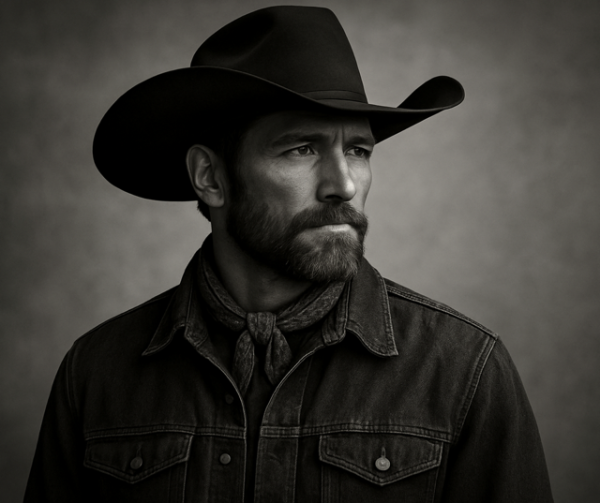
Amid the unstoppable rise of AI that has spilled into nearly every school and workplace, the members of the Editorial Board willingly subjected themselves to listening to eight songs released by the computer-generated country musical “artist” Breaking Rust; one of those songs, “Walk My Walk,” recently reached No. 1 on Billboard’s Country Digital Song Sales chart. Let’s dive into the cesspool of AI slop trying its hardest to infiltrate the music industry and fool millions of listeners.
Track 1 — No Apologies Left in Me
There’s No Will Left In Me to ever listen to music again after these four minutes and six seconds of computer-generated garbage. The lyrics in this one feel like you asked artificial intelligence to write a country song. Jokes aside, it’s well and truly terrible — the song develops into a crescendo of painfully phony, so-called gritty and emotional vocals that only make you cringe. Maybe if I were 6 years old, wearing my cowboy costume and standing in front of a mirror, I would get something out of it. Otherwise, I think I’d rather put Taylor Swift on shuffle, and that’s saying a lot.
Track 2 — Time Don’t Stop
If time doesn’t stop, this song definitely should have. Breaking Rust recycled leftover lyrics and melodies from its other songs, slapped on a cheap, dramatic, veneer, and called it a day. AI can scratch the surface of all the worn-out country stereotypes and still generate “Time Don’t Stop,” a bootleg of a bootleg. Real country artists bring something unique to the table: a different voice, or a specific story. This so-called song, however, sounds like the AI wannabe country boy “Breaking Rust” threw a handful of exhausted clichés into a blender, hit purée and uploaded whatever mush came out. By the time the bland, predictable and hollow “song” ends, you’re left wondering if you listened to a new track, or just recycled noise.
Track 3 — Livin’ On Borrowed Time
By the end of “Livin’ On Borrowed Time,” the only thing you’ll be borrowing is some patience since the song doesn’t offer much else. Every verse sounds like AI grabbed some random inspirational quotes and glued them together with a fake country accent. The same tired, soulless lines are reused throughout every other song on the “album,” and they lack any sense of real emotion and passion that real country songs possess. The fact that the song somehow racked up millions of streams is mind boggling. It’s hard to believe actual humans sat through a song as fake and as empty as “Livin’ On Borrowed Time.” At this point, the numbers feel just as artificial as the music does. This song feels less like “borrowed time” and more like borrowed listeners, because nothing about this song earns the attention it claims.
Track 4 — Kicking Back At the Ground
In this track, Breaking Rust discusses overcoming various obstacles that life throws at you. The song is fairly passable at the beginning, but quickly becomes repetitive as the it progresses. The song doesn’t stand out by any means; it sounds very similar to the other tracks on the album. If someone who despised country music were asked to explain their hate for the genre, they’d play “Kicking Back At The Ground.” The storytelling fails pathetically; it is as though each verse says the same thing, just in different, dull ways.
Track 5 — The Ones You Trust
If I’m being honest, the one thing Breaking Rust somewhat pulls off (impressive for something with no ears, brain, or basic human context) is its beats and rhythm. Sure, the lyrics are questionable, but country music has been recycling beer, girls and hometowns for decades, so at least AI attempted to switch things up a little bit. To me, this song feels like what AI thinks an identity awakening should sound like. And honestly, the emotion is almost there. It’s still cringey, obviously, but I can see the vision. It’s blurry, and soulless, but it’s there.
Track 6 — Love Don’t Live Here
Though Breaking Rust is sure to inform us in “Love Don’t Live Here” that his heart is “wrapped in barbed wire and pain,” we must remind you: Breaking Rust’s heart does not actually exist. Computer algorithms don’t have hearts. This fact clarifies the issue persistent throughout this song – as much as we’d like to feel sorry for Breaking Rust’s heartbreak, the empty cliches and detached metaphors stir no emotion. Listening to this feels like playing a depressing game of bingo for sad song tropes.
Track 7 — Walk My Walk
In “Walk my Walk,” Breaking Rust tells the listener a whopping total of 10 times that if they don’t like how he talks, they can kick rocks. What a brilliant rhyme. However, we are a part of the former category, and we’d much rather swallow rocks after listening to this song. In the chorus, Breaking Rust rebelliously insists that he “ain’t changing [his] tone, ain’t changing [his] song.” That’s ironic, considering every single song on this album has been a duplicate in style and tone. Kudos for humor, at least.
Track 8 — Whiskey Don’t Talk Back
This song is basically the Walmart version of a Blake Shelton cosplay. It’s like AI studied his entire discography, took notes on the rasp, the charm, the boots, the barstool . . . and then recreated it with the enthusiasm of a discount Halloween costume. The rasp is there (just in a bargain-bin kind of way) but the lyrics (for all of these songs) sound like someone fed Hallmark clichés into a generator and told it to “make it twangy” and tie it together with a string of dirty hay. Sure, “Whiskey Don’t Talk Back” — AI nailed that — but please stop writing things like a love note written on a wet napkin at a gas station honky-tonk.