As students and teachers adjust to schedule changes and declining enrollment, Scott Sumerak, Christina Stouffer and Keaf Holliday are among teachers who face a familiar concern: whether their elective classes will survive next year’s course-evaluation cycle or be cut.
Under the district’s current approach, classes with fewer than 15 students enrolled are at risk of being cut unless they meet other criteria related to graduation pathways such as the IB Diploma Programme and Career Tech Education. If a course is vital to the district’s strategic plan, culturally significant, and/or the class can be combined with another class, it may also be sustained.
Sumerak, who teaches Theatre Exploration, Stagecraft and Design, Theatre Management and Acting Ensemble, said the district should not begin with enrollment when evaluating classes. “The starting point should be: Is this class required for a graduation pathway? Does it matter culturally or historically to the school?” he said. “Fifteen kids shouldn’t be the first question.”
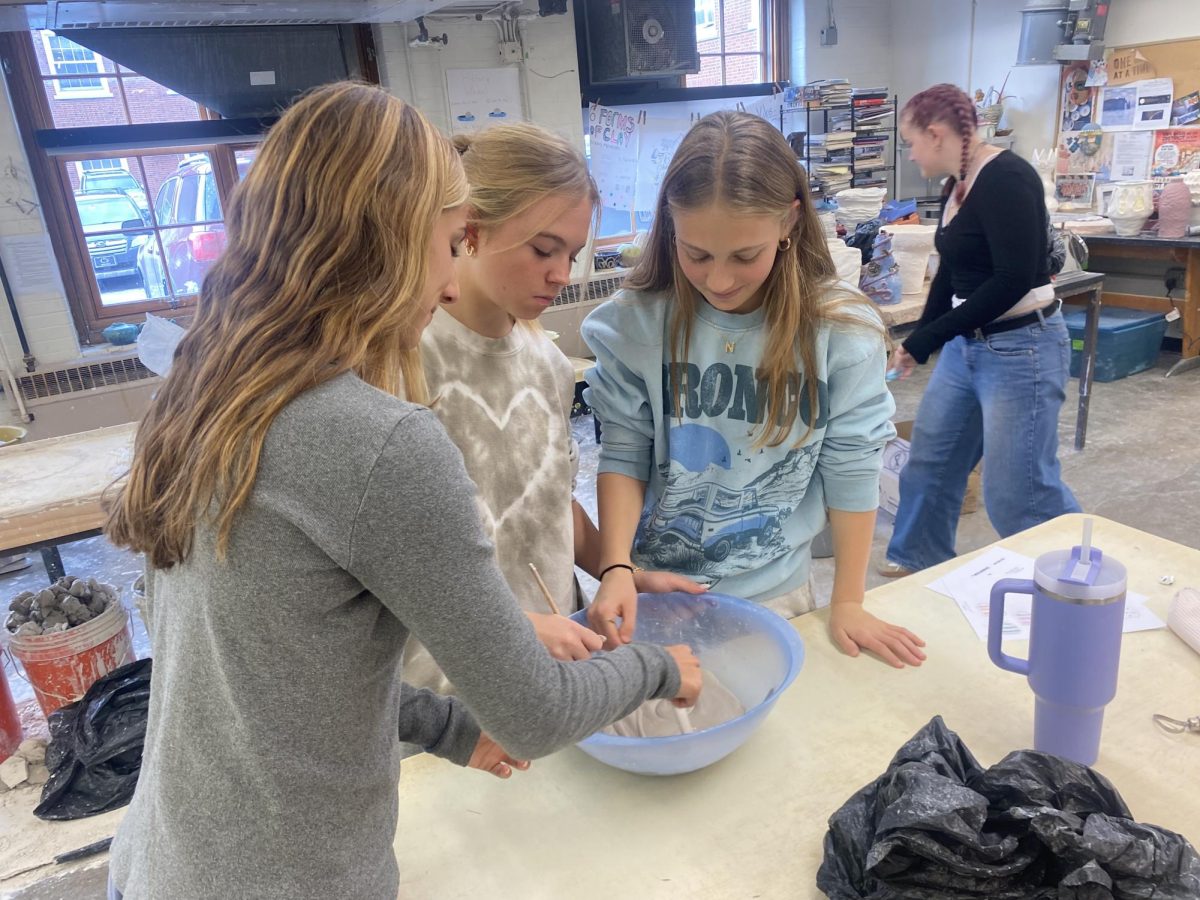
Stouffer, who teaches three Ceramics 1 classes, two Ceramics 2 classes, and three split classes, said that decisions based only on numbers can miss the full picture of what a class offers students. “The 15-students minimum is a data point. A lot of decisions are made by looking at data, but sometimes there are other things you have to think of first when evaluating a class, like what students gain from arts classes. Not everything meaningful fits neatly on an enrollment chart,” she said.
Holliday, who teaches Art Exploration, Illustration and Digital Design 1, IB Illustration and Digital Design 2 and IB Animation Video Editing, said that IB courses, including those he teaches, require smaller class sizes. “If you have IB students in a class, you have to honor the IB curriculum,” he said.
Holliday said that while changes are inevitable, the goal is to ensure the arts remain strong in the long term. “I’m optimistic. As long as we keep adapting, and the district listens to what students’ need, the arts will stay an essential part of this school,” he said.
Under the previous block-schedule format, which comprised eight class periods, students had more opportunities to fit elective classes into their day. “The biggest shift came when the district moved from block scheduling to an every-day schedule,” Sumerak said. With the change this year to an every class, every day schedule, a period was removed, reducing the number of electives students could fit into their schedules.
Another limiting factor is the requirement that freshmen must take Health and a physical education class during freshman year. These semester courses, taken consecutively, occupy one of the seven class slots. A state requirement, Financial Literacy, is typically taken in 10th grade, and SHHS students must earn an additional P.E. credit before graduating. These mandatory courses make it harder for an elective class to find space in a student’s schedule.
“It’s not that students don’t want to take theater classes. It’s that they don’t have the space to take theater classes. Last year I had 42 students in Stagecraft,” Sumerak said. “This year I have four. The class didn’t suddenly get worse; students just don’t have the room in their schedules.”
A 15-student requirement means that elective classes with low enrollment may be cut. Sumerak said he worries that the district risks losing parts of its identity if arts classes begin to disappear. “These programs are what make a student feel like they belong,” he said. “They’re where students find their voice.”
Uncertainty about course offerings isn’t new. “We all feel like we’re constantly a cat on a hot tin roof. You’re always waiting to see if next year’s classes will run,” Sumerak said.
Stouffer said that a schedule that limits elective periods creates a bottleneck of what students can sign up for. “Sometimes the interest is absolutely there,” Stouffer said. “But if students can’t fit the class into their schedule, their hands are tied.”
“There are students who want to be here,” Holliday said. “But their academic plan pulls them in 10 different directions.” Students in AP or IB tracks, he added, often have even less flexibility. Students enrolled in the full IB diploma track, for example, are required to take six IB courses.
The district does not always replace teachers who retire, a practice known as attrition — a pattern that puts all the more pressure on electives. Holliday, who will retire after this school year, said enrollment challenges stem from a smaller student body overall. “It’s not that the district doesn’t support the arts. We just don’t have as many students as we did in 2001,” he said.
According to the 2004 Auditor of State report, 5,625 students were enrolled across the district in 2001. According to the district’s Oct. 9 enrollment update presented to the Board of Education, 4,188 students were enrolled in the district on Sept. 19.
The digital design program comprises three tiers: IDD 1, IDD 2 and IDD 3. But if enrollment numbers drop further, some courses may be combined or restructured. “We might have to blend traditional drawing with digital art, or combine design levels,” Holliday said.
Stouffer said ceramics class enrollment has remained stable, but even strong classes feel vulnerable when electives are evaluated year by year. “There’s always concern,” she said. “But Shaker has always supported the arts, and I really feel that support.”
What keeps digital design courses stable, Holliday said, is partly the IB program, which allows for smaller class sizes and offers college credit opportunities. “The IB program is important for keeping some of these classes alive,” he said. “It gives students a pathway that’s recognized beyond high school.”
To keep numbers up, Holiday said the Art Department presents its courses to all art students during scheduling season to spark interest. He said he meets with students who show interest in digital media.
Stouffer recruits students to continue into higher-level ceramics. She also helps students who want to take a ceramics elective figure out how the class might fit into their schedule if they don’t have any more room.
Sumerak is rewriting the theatre course catalog with his Theatre Management students and visiting classrooms to make sure ninth graders understand the theatre class options before scheduling starts. “If we want the program to live, we have to make sure students know what’s here,” he said. With the theatre program, Sumerak plans to recruit more actively, including visiting the middle school.
Despite the outreach, Sumerak worries about what could happen if enrollment continues to decline. “This program is part of Shaker’s identity,” he said. “If it were cut, we’d be telling students their art form doesn’t matter. And that’s not the message we want to send.”
Said Sumerak, “We adapt. We problem-solve. We rebuild. Because once a class is gone, it’s gone, and these programs matter too much to lose.”
A version of this article appears in print on page 3 of Volume 96, Issue 3, published Dec. 15, 2025.