
In at least 15 classrooms last week, temperatures reached both hot and cold extremes.
In a Jan. 28 Shakerite survey, teachers identified nine rooms that had inadequate or no heat last week, and six that were too hot.
The survey received 30 responses; 53.5 percent of respondents said that on the day of the survey, they taught in classrooms that were appropriately heated; 16.7 percent said that they taught in a classroom that did not have functioning heat; 23.3 percent taught in a classroom that was too hot; 10 percent taught in a classroom that was not adequately heated; 3.3 percent said that their classroom did not have functioning/adequate heat, but they moved their class to a heated location.
On the day of the survey, there was a wind chill temperature of minus 4 degrees Fahrenheit at 8 a.m.
Classrooms listed on the survey that had inadequate or no heat included Rooms 173, 156, 171, 221, 133, 130, 158, the large auditorium and the library.
Classrooms listed on the survey that were too hot included the small auditorium, Rooms 154, 300, 115, 259 and 255.
In the survey, an English teacher wrote that the small auditorium was “uncomfortably hot” during 10th period. “Students were complaining, asking to leave to fill their water bottles, trying to adjust clothing layers, and asking to leave the class on a pass more frequently than usual,” she said.
Intervention specialist Piyali Roy, who has a study hall 7/8 period in the small auditorium, said that temperatures in the space fluctuate seasonally. “In the summer, we were freezing. We had to call custodians. They fixed it. They increased the temperature, and then it was pleasant,” she said. Roy said that it took two weeks for the problem to be fixed.
However, Roy said that the small auditorium has been uncomfortably hot for at least three weeks. She said the temperature is typically 87 to 90 degrees. At the time of the interview, the temperature in the small auditorium was 87 degrees.
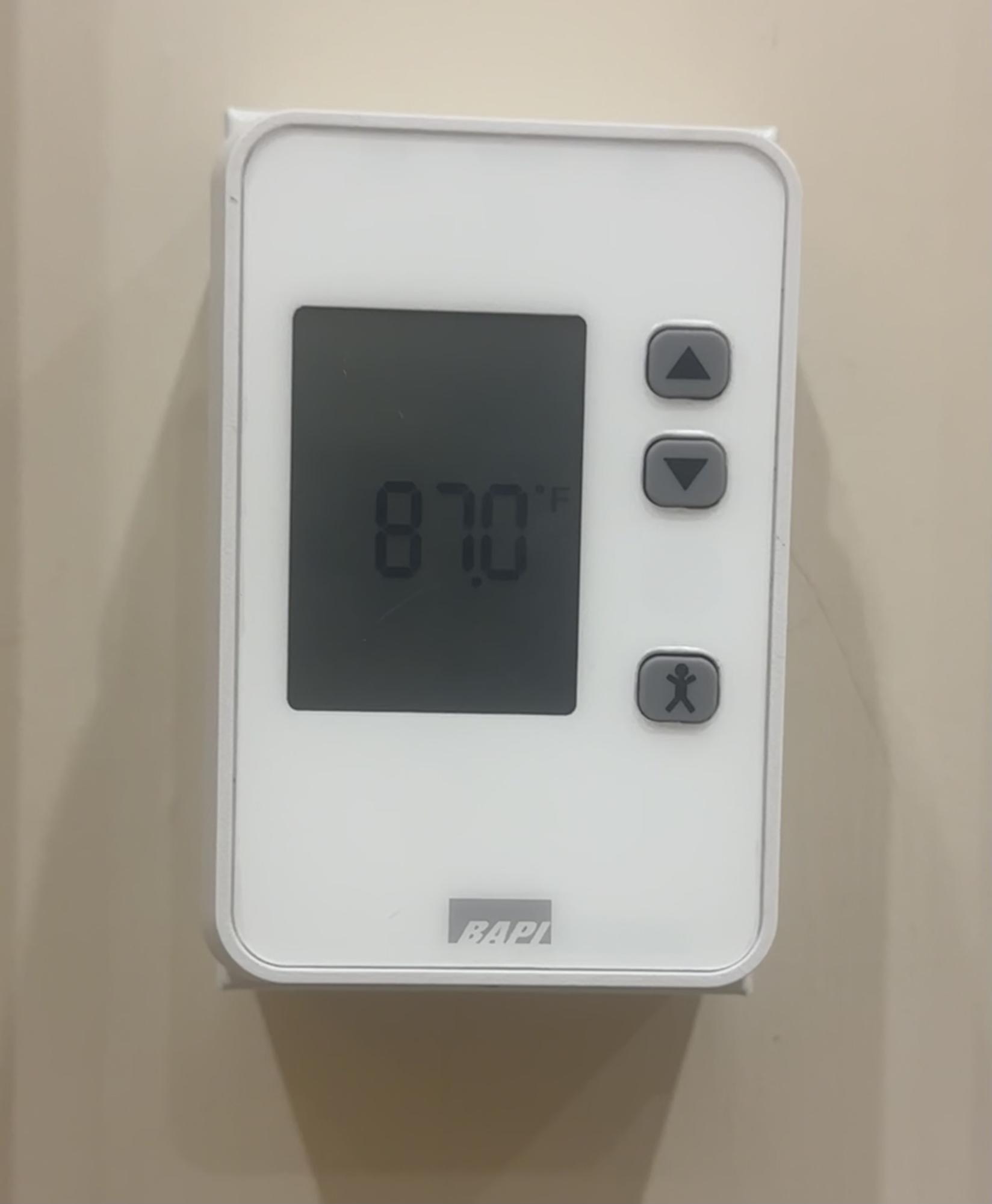
If the doors are closed, Roy said, the temperature rises to 92 degrees. So, teachers in the small auditorium must keep the doors open during class. Roy said that this practice has caused students to wander out of the class more frequently without a pass. “They’re wandering in the hallway. They sneak out,” she said.
Roy said that the heating issue has even caused problems with attendance. “Half of the kids didn’t even come in today. It’s so hot, we can’t sit here,” she said.
Roy said that there is no way for teachers to alleviate the heat. “It’s an enclosed place. There’s no windows or any other doors for the air to pass,” she said.
The only classes held in the small auditorium are study halls. Roy said that there are no alternative rooms that these classes could be moved to due to the size of typical study halls. Her study hall comprises 36 students.
Roy said that the heat causes her to feel dehydrated. She said that she has noticed students taking more frequent water breaks. “Then they wander the hallway because it’s so hot here,” she said.
“I feel very suffocated,” Roy said. “Very stuffed.”
In the survey, an English teacher wrote that her classroom was 85 degrees. “It regularly gets above 80 in the winter. In the warmer months, the opposite happens. It’s often near 60 when it’s warm outside. It is almost never a comfortable temperature,” she said.
Another English teacher wrote that in Room 115, the temperature hovered between 80-83 degrees with 13 percent humidity.
A social studies teacher wrote that today and last week were comfortable in Room 222; however, that was only after she put in a custodial request to have the heat adjusted. “The radiator was producing so much heat that windows had to be kept open,and the radiator itself posed a danger to students as it was hot enough to burn flesh,” she wrote in the survey.
A science teacher wrote in the survey that there were heating issues in Room 172 a few weeks before winter break. “The back heater/blower by the window started spewing hot water and steam during a first-period class. The unit was shut off completely (and custodians came to clean up the huge water mess that was made). Subsequently, a portable heater was placed in the room by the blower and left running continuously since then. We were advised to not allow students to sit close to the portable heater,” he wrote.
On the colder side of the spectrum, English Department Chairwoman Emily Shrestha said that many classrooms in the front hallway of the first floor experience inadequate heating. In the morning, she checks “problem spaces” on the first floor – classrooms that she knows often have unpredictable heating. She said that she checks Rooms 226, 153, 156, 157, 158 and 161.
Most of the heating issues in these rooms are new to this year, she said; however, Room 153 has had consistent heating issues for four years. “It has a very fancy HVAC heater air conditioner that nobody here can actually fix, so they have to call out and have it serviced every time they need it,” Shrestha said.
English teacher Kevin Callahan has taught in Room 153 since 2021 and said that problems with heating that he knew of began in 2022.
“In various years, from 2022 to present, the heating in 153 has been an issue,” he said in an email. “I keep a room thermometer in 153, and at multiple points over this time span, temperature readings have reached as low as 53 degrees Fahrenheit. I believe the low point for this year was 58 degrees. However, I was on family leave when issues started this winter.”
Callahan said that no solution to the heating issue thus far is permanent. “For example, last year I was equipped with two space heaters, and the actual radiator did not seem to be fixed until some time in March. The year previous, I had my own contraband space heater to heat up the room,” he said.
“This year, there has been a fix, but it involved a maintenance worker essentially setting up the radiator to only blow heat, and the temperature is not as regulated. It works better in the winter, because the room is incredibly hot. For example, at one point two weeks ago, my room thermometer read 85.8 degrees Fahrenheit, but I have windows, and can get the temperature to stay at about the low to mid 70s with windows open.”
Shrestha said that if she discovers a heating issue in the morning, her first action is to ensure the room has a space heater. “Because sometimes if a room has been keeping the temperature, then someone will loan the space heater to someone else who needs it,” she said. “So as long as there’s a space heater in the room, then I know that the teachers are going to be good.”
“If it’s really, really cold, then I’ll reach out to them [the teachers],” she said.
Shrestha said that she began routinely checking rooms after midterms week, which was the week of Jan. 12.
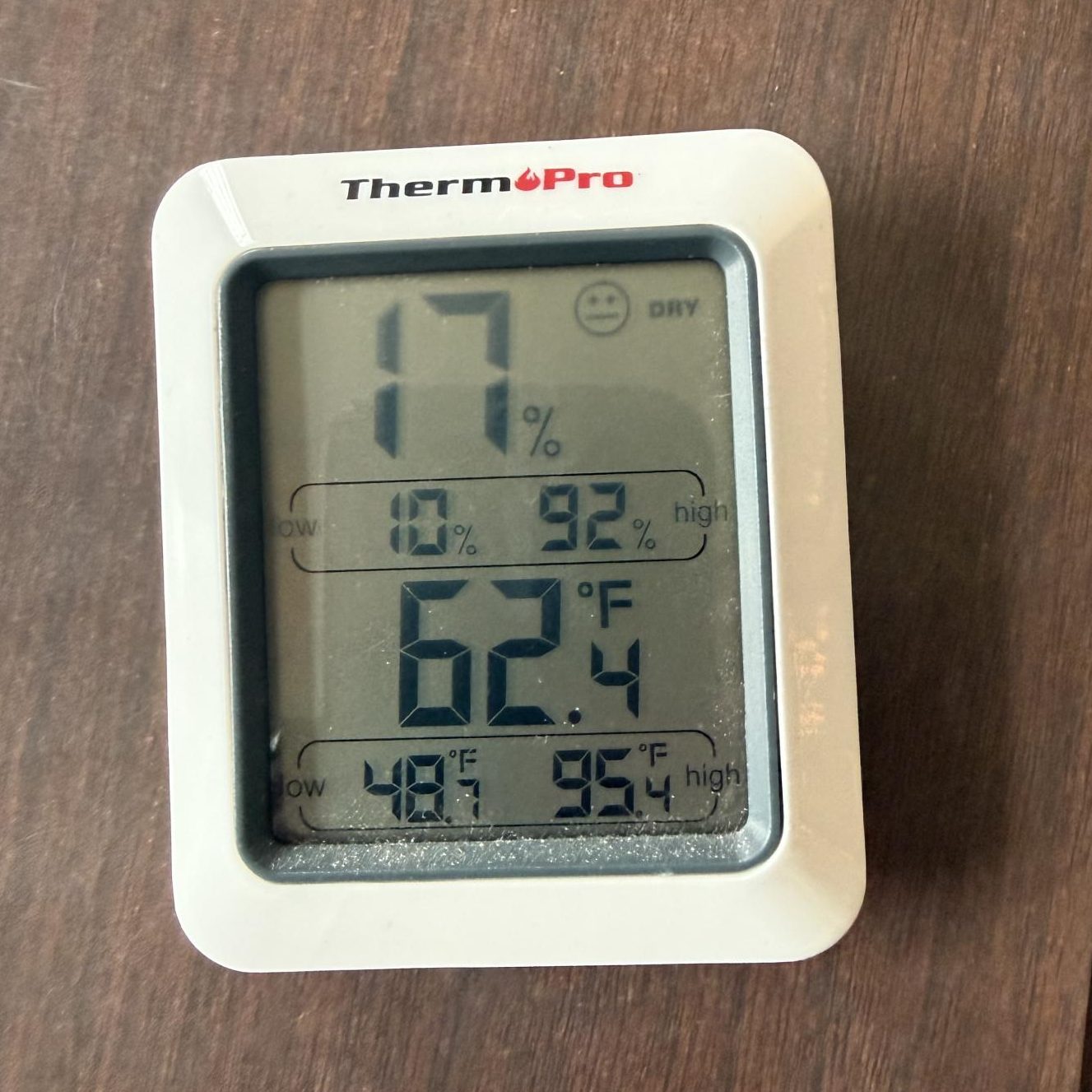
English teacher Marina Wasserman teaches in Room 156 periods 1, 3 and 10. She said that temperatures have fluctuated between 62 and 65 degrees, and reached about 67 degrees after she received a space heater.
Wasserman said that the problem began Jan. 21. That morning, her class had midterm testing in the room. She submitted a high-priority maintenance request. At around 12 p.m., she said, a custodian came and fixed the issue.
“That was about an hour after I submitted it,” she said. “At that point, it [the heater] was blowing cold. He was able to get it so that it had some heat coming out of it. But it still wasn’t blowing hot air. It was just, if you put your hands on it, you could feel there was some warmth in there.”
She said the issue recurred Jan. 28. The room was 65 degrees, and no heat was blowing out of the heater. This time, custodians came in and looked at the heater but didn’t inspect it, she said. They came back to her classroom with a space heater. She also borrowed an additional space heater, but had to return it, so her room currently only has one.
Wasserman said that the cold can inhibit student focus. “They can’t focus on the things that we’re talking about. And I get it; I’m sitting there and I’m trying to type, and my fingers — they get cold,” she said.
While she hasn’t relocated her class, Wasserman said that she’s discussed it. “We debated on it, and we talked to Ms. Sweigert about if the space is available as a backup plan, if the kids came in and it was just too much,” she said, referring to the library as an alternative space to the classroom.
Wasserman said that the space heaters only help “if you are in the line of fire. The problem is that the classrooms are set up in a way that there have to be desks by the windows. There’s just not space otherwise.” For example, she said, in her 10th period class, every desk is full. “Kids have to sit by the window, and the heater can only do so much. So half the room is a little bit warmer.”
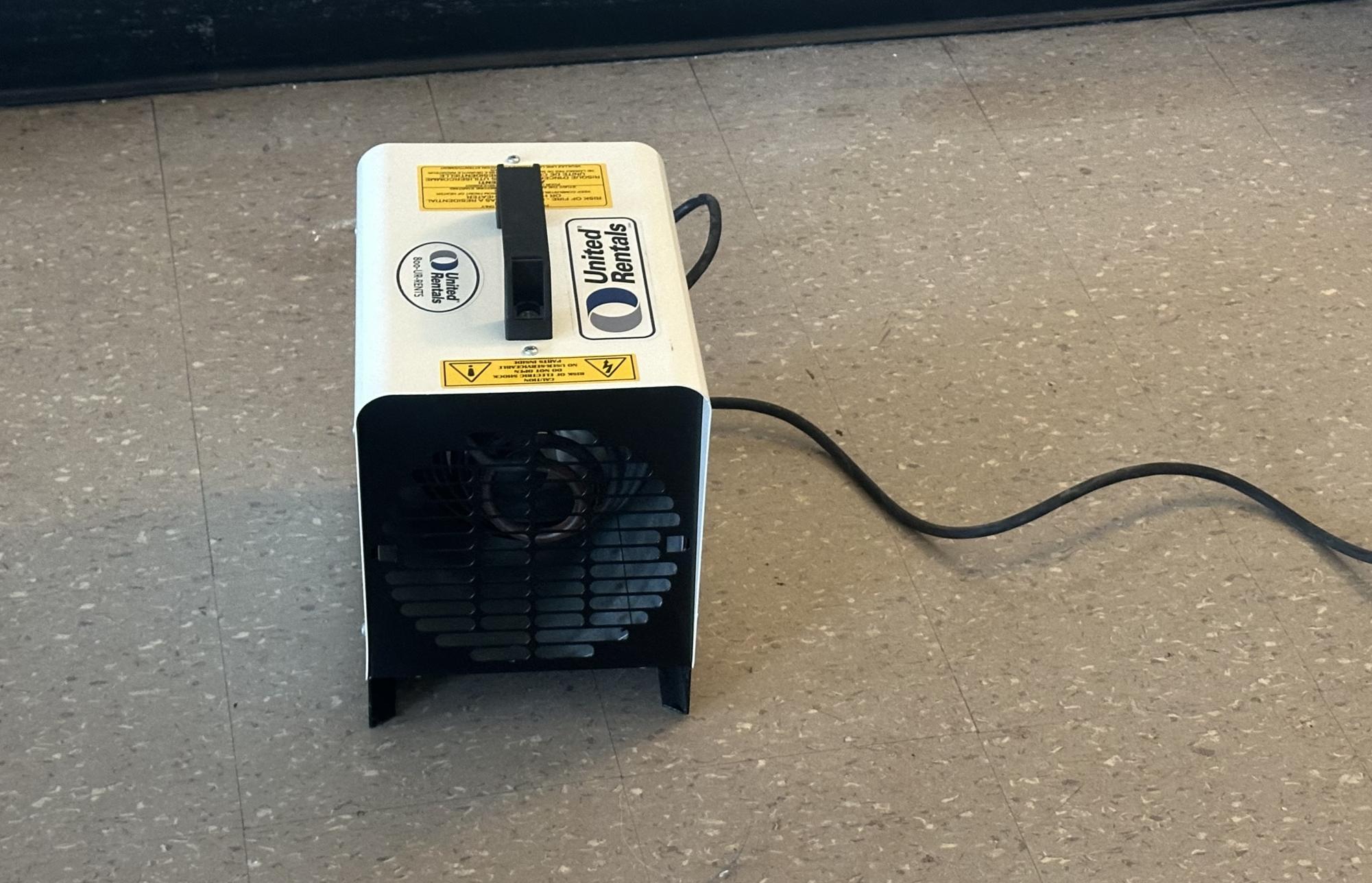
Wasserman said that using space heaters makes her concerned about safety. “The electrical can’t handle space heaters like that. It’s going to start a fire. It blew out when they came in – they plugged it into the power strip in my room, and the power strip is dead. So I just get nervous that this is not sustainable,” she said.
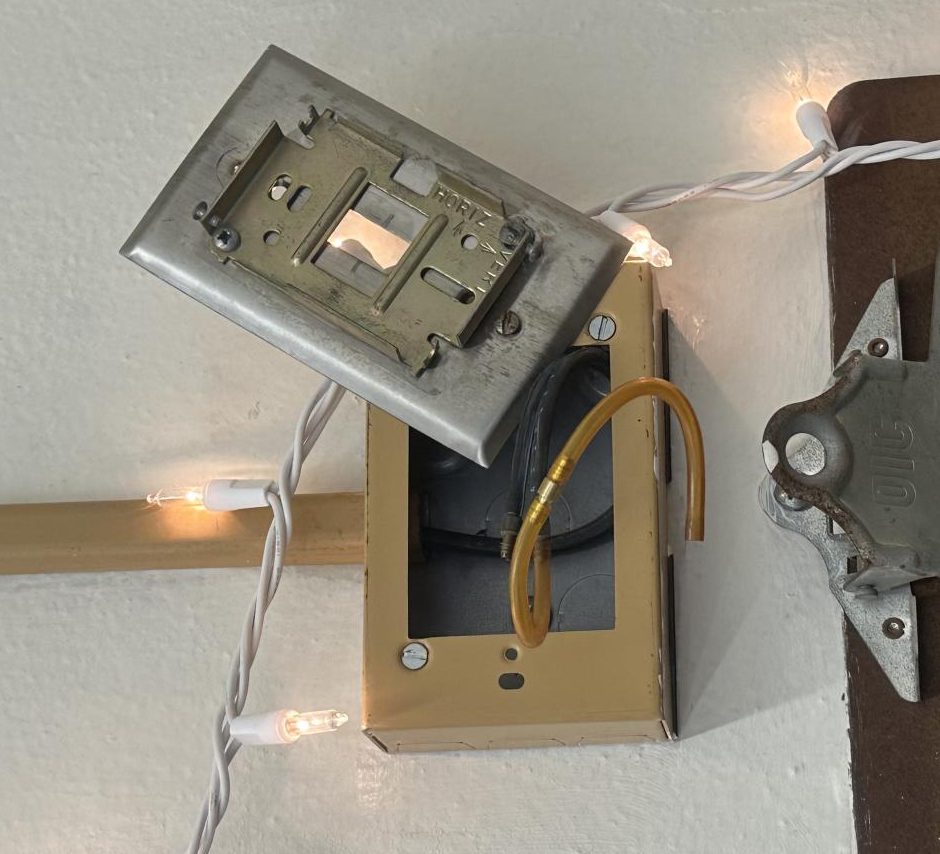
Wasserman said that she does not currently have a working thermometer in her room. Last week, she borrowed a magnetic thermometer from Callahan, because the thermostat in her room does not work. “The units on the wall aren’t accurate. Mine has wires coming out and it hisses,” she said. She said that it would be helpful for every room to have a working and accurate thermometer.
She said that she also taught in Room 156 last year, but heating was not a significant issue then.
Wasserman said that no solution is permanent. She said, “So much of this is like a Band-Aid on an old building.”