
In Cleveland, civil rights attorney Subodh Chandra has become a prominent figure in representing individuals and communities seeking redress in such matters. In court, Chandra has argued cases about police accountability, voting rights, free speech and workplace discrimination.
Chandra, a Shaker resident and parent of three SHHS graduates, is the founding and managing partner of The Chandra Law Firm LLC, which is based in downtown Cleveland. Born and raised in Norman, Oklahoma, after his parents immigrated from India, Chandra’s early life experiences shaped his commitment to civil rights law.
“I experienced a fair amount of racial or national origin discrimination as a child in school,” Chandra said.
Some of this discrimination emerged from misconceptions about his identity. “During the Iranian hostage crisis of 1979, I remember one episode where my parents were at our favorite local pizza place, and a man confronted my father,” Chandra said.
The Iranian Hostage Crisis involved the seizure of 66 American diplomats and citizens in the U.S. Embassy in Tehran by Iranian students in November 1979, leading to protracted diplomatic tensions between the two nations. Fifty-two of the hostages were held until January 1980. Eight U.S. servicemen died in a failed rescue effort. U.S. TV newscasts displayed a running tally of days captive.
Later, during the first Gulf War, Chandra said, someone pulled a gun on his younger brother while he was in high school. This war erupted in 1990 following Iraq’s invasion of Kuwait, involving a coalition of forces led by the United States responding to the aggression.
In both cases, people in Norman assumed that because Chandra was of Indian descent, he was connected to events that involved people from the middle east.
After graduating from Stanford University, Chandra earned a law degree from Yale Law School.
His legal career spans both the public and private sectors. Early in his professional career, he served as the director of law for the city of Cleveland, where he managed a team of attorneys handling municipal legal matters.
In 2014, Chandra drew national media attention when he represented the family of Tamir Rice, a 12-year-old Black boy who was shot and killed by two white Cleveland police officers, Timothy Loehmann and Frank Garmback. Loehmann shot Rice, who had been playing with a toy gun, within seconds of exiting the police car.
The officers were not criminally charged, sparking national outrage and discussion about police accountability.
Rice’s family filed a lawsuit that claimed that the officers violated his constitutional rights by acting recklessly and using excessive force.
Two years later, in 2016, the city of Cleveland settled the lawsuit, paying the Rice family $6 million. Loehmann was fired, but he later found employment with other police agencies, where he eventually resigned.
While making the case for Rice’s family in court, Chandra engaged with the media outside of court to advocate for justice. “It became apparent early in my representation of Tamir Rice that we were not getting a fair shake by the elected county prosecutor and his assistant prosecutors,” Chandra said. For example, the police officers’ statements were not cross-examined.
“But what I could do is make sure the world knew what actually happened and how they were treated unfairly, in the hope that it would be a deterrent to future misconduct,” Chandra said.
At the next election, three months later, the prosecutor that had handled the case lost his re-election bid in the Democratic primary.
Through cases such as Rice’s, Chandra addressed what he describes as disparities within the U.S. justice system. “There are two systems of justice, you know,” he said. “There is supposed to be one system of justice in which everyone is treated the same, it just doesn’t work that way in reality.”
“Equal justice under law is merely aspirational, but not a reality.”
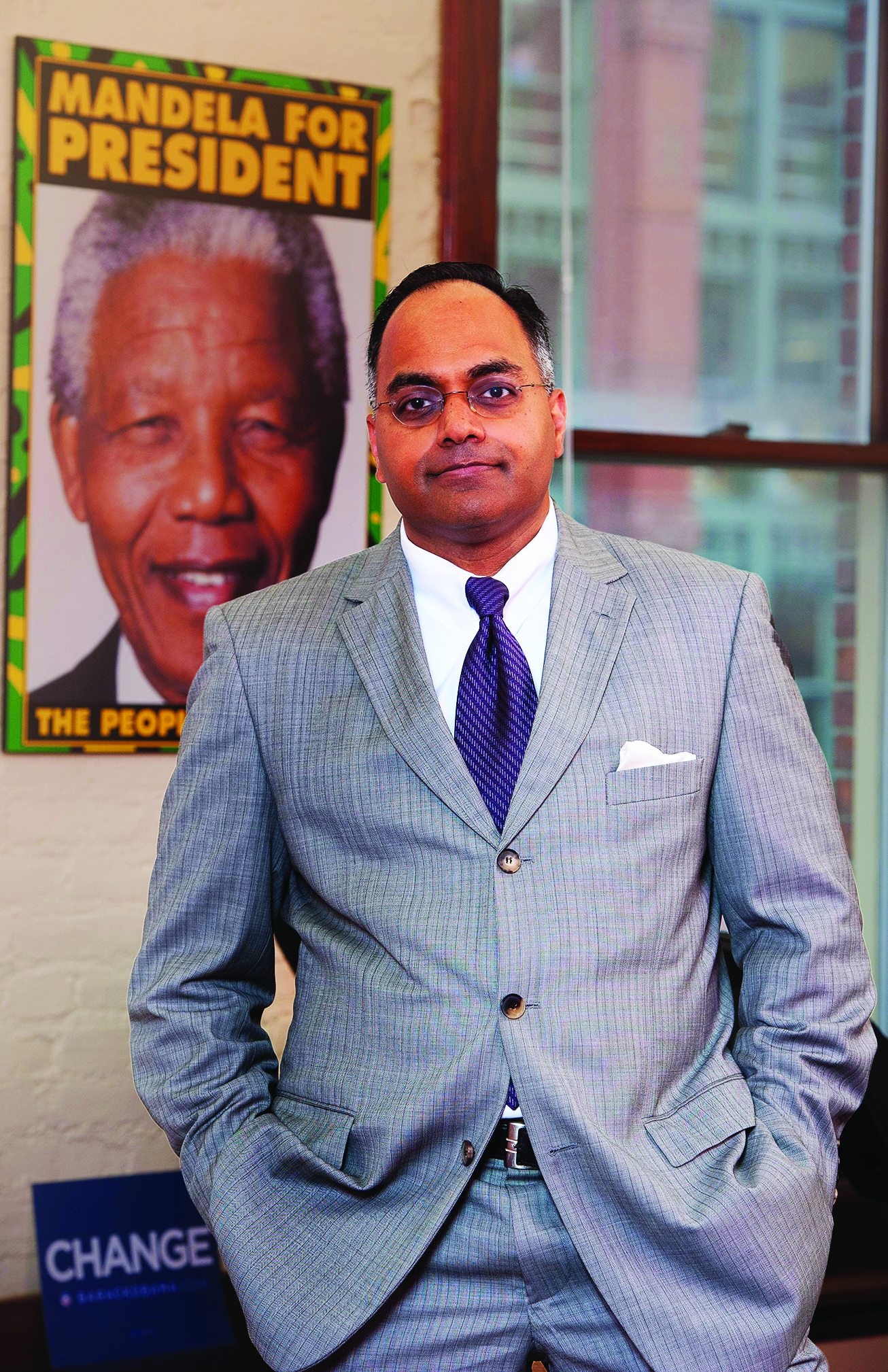
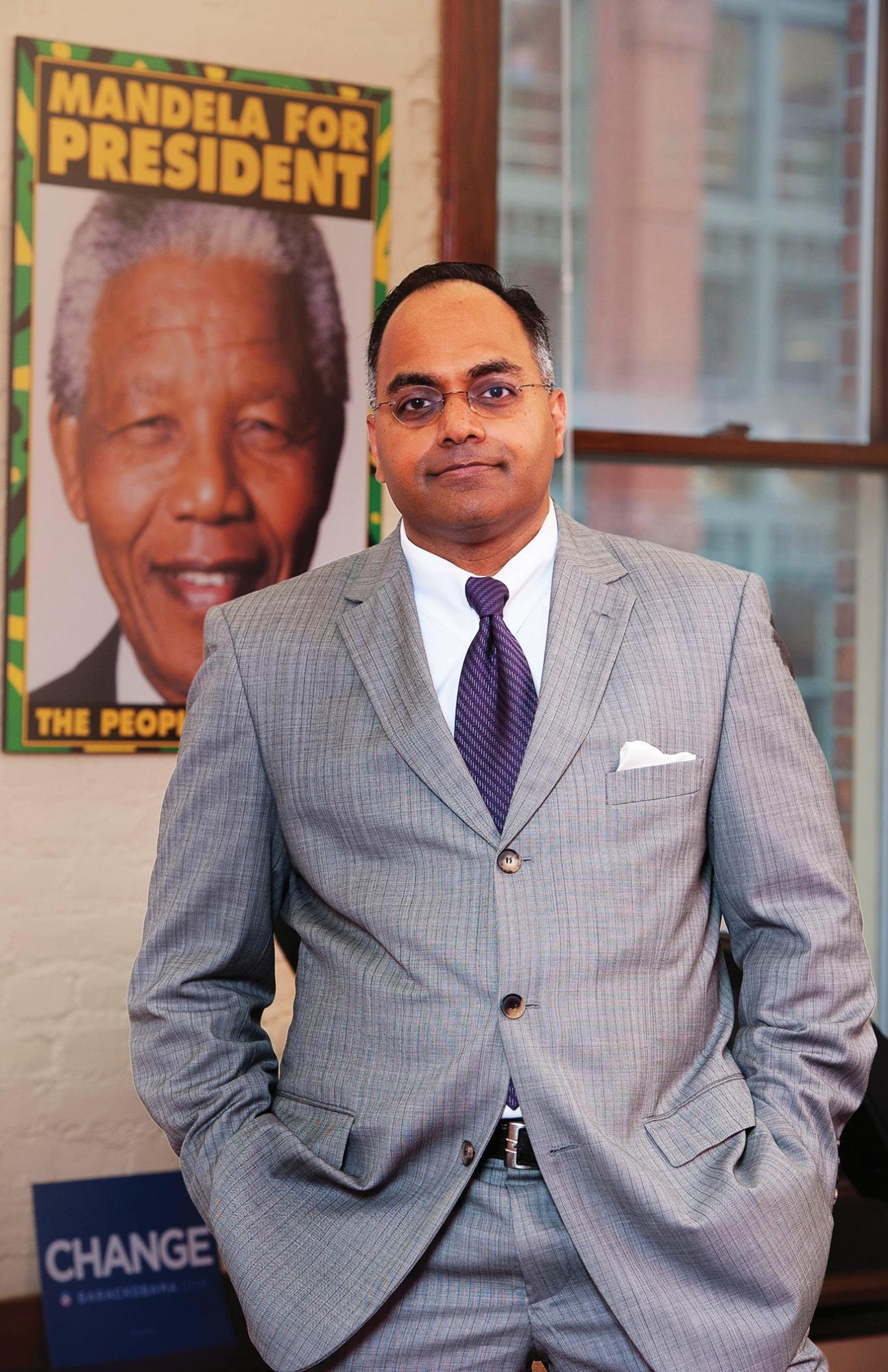
In addition to police-related cases, Chandra has handled legal matters connected to voting access and election law. He has challenged measures he and his clients argue restrict access to the ballot. These cases often involve constitutional claims and center on the interpretation and application of federal and state laws about voting rights.
Chandra has also focused on issues involving the First Amendment, including cases that address the rights of individuals to express views in public forums or workplaces. These cases often involve suing the government when plaintiffs assert their speech rights have been violated. “The First Amendment is the source, it is the wellspring of all of our other rights,” he said. “Without free speech, we simply cannot be considered the land of the free.”
Chandra often works alongside civil rights and public interest organizations, blending his legal practice with broader advocacy efforts. While many of these groups concentrate on driving systemic reform, he tackles injustice through individual cases that can lead to wider impact. His work has included partnerships and joint initiatives that address legal challenges both locally and across the country.
“We are witnessing the destruction of democracy before our very eyes,” Chandra said, pointing to incidents such as the violent Capitol attack, where individuals who attacked police officers were later pardoned. “The former governor of Illinois, caught on tape asking for bribes in return for official acts, is yet another example,” Chandra said.
In response, he has encouraged increased civic engagement and public awareness. He regularly speaks at forums and public events focused on democratic institutions, legal protections and civil liberties.
Chandra also advocates for diversity, equity and inclusion, especially in the face of current political challenges.
The Trump administration and GOP lawmakers have worked to eliminate DEI programs in the federal government, with legislation such as the Dismantle DEI Act and the FAIR Act. New executive orders have ended DEI initiatives, while Republican bills aim to cut related funding and offices.
In response, Chandra continues to advocate for policies and legal frameworks that support these values. “Considering the hard-fought gains, it’s incomprehensible to me that anyone would try to politicize these efforts,” Chandra said.
He noted that even small victories highlight the role advocacy plays in supporting individuals and communities. In one case involving retaliation, a client’s child told him, “You gave me my dad back,” reflecting the personal impact of his work.
“They got to drink some measure from the cup of justice,” he said. “That’s when you realize you can help facilitate good results for people.”
This fight for justice is deeply rooted in both his professional and personal life. “My family is central to everything,” he said, sharing that his marriage to a fellow civil rights lawyer stems from their shared values and dedication to public service.
Their children have been raised with a strong sense of history and purpose, learning about the Civil Rights Movement and the legacy of Martin Luther King Jr. from a young age, he said. “The values that we try to live” are more than ideals — they are a way of life for the Chandra family.
Chandra’s day-to-day work, however, can be a significant challenge. “Every day is hectic,” he said. “You might start off with a plan, and you’re lucky if you get only one or two of those things done.”
Court-imposed deadlines, new case developments, and incoming legal matters often reshape the course of a day, making unpredictability a constant feature of his work.
Chandra describes the daily tasks of a civil rights lawyer as largely centered on research, writing and managing deadlines, rather than frequent courtroom appearances. “The average person might picture a lawyer standing up in court and arguing for what’s right,” he said. “But in reality, the bulk of each day is spent battling hundreds of emails, text messages, and phone calls.”
With the increased use of technology, many court proceedings now happen by phone or video conference. “It’s mostly legal research, legal drafting, editing, and filing arguments that the judges rarely hear,” Chandra said.
The demands of lawsuits often make work-life balance a significant challenge. “There are midnight filing deadlines in federal court. You’re editing down to the wire to give the court and your client your best work,” Chandra said.
His work requires constant availability, often outside regular business hours. “Some clients only have time to talk to you in the evenings,” he said, adding that the intensity of his work makes it hard to spend as much time with family as he’d like.
Advocating for individual plaintiffs can be especially challenging when their cases are seen as less significant than large-scale litigation. “Some judges may view a case as unimportant because it’s just one person,” he said, referencing civil rights claims involving issues such as retaliation or discrimination.
Chandra also emphasizes the critical role of legal writing and listening in his work. He describes legal writing as a discipline that demands clarity and precision, where “the actual facts should tell your story.”
Listening, he says, is equally vital, especially in depositions and trial preparation. He recalled using an AI tool to summarize a lengthy case, which helped him hear it in a new way. “If you have the capacity to really listen, you will develop the case and see things you would never have been able to see,” he said.
Despite his demanding career, Chandra has developed a deep passion for the performing arts. “I’d love to be involved in community theater. You know, I’m a thespian trapped in a lawyer’s body. And a singer,” he said with a smile.
However, he acknowledged that the demands of his legal career leave little room for such endeavors.
“It’s going to be a while before I have time to do this,” he said. “Probably won’t have a lot of time to do that as long as I’m working full time in this profession.”
Said Chandra,“Day in and day out, my job is to shine a light on injustices.”